Showing posts with label Bailout. Show all posts

Thursday, October 02, 2008

A letter from Represenative:John Tierney of Salem MA.

Congressman Tierney: Congress must proceed with caution

Congressman Tierney's Opinion Editorial first appeared in The Salem News on September 26, 2008.

It seems that nearly everyone agrees that something systemic must be done to address the looming financial crisis. Still, the Bush administration's assertion that Congress should immediately, without hesitation or question, pass a carte blanche demand that the Secretary of the Treasury have unbridled authority to use $700 billion of taxpayers' money to buy assets of questionable value from entities that acted horribly, is totally unacceptable.

This is, after all, the same administration that threatened imminent danger to the United States if it did not get immediate passage of the Authorization for the Use of Military Force (AUMF) regarding Iraq, only to have America learn, to its detriment, that such representations were false.

Treasury Secretary Henry Paulson, while considered a smart man, is also one who, along with President Bush, Alan Greenspan and a host of others, continued over decades to fight off even reasonable regulation, failing dismally to supervise and oversee the financial industry.

Over the last 18 months, Secretary Paulson first told us everything was fine. He then followed with word of an impending crisis that was supposedly contained. Next, he embarked on a series of unsuccessful "fixes" for an economy deemed "on the brink," and last week, he proposed the largest government intervention since the Great Depression.

We are now faced with the consideration as to whether one should attack this crisis as the administration does by targeting illiquid assets that have lost value and "buying" them in order to halt the spiral of falling prices; or, whether to consider the opinion of other economic experts who suggest allowing the Federal Reserve to use its extensive funds and authorities to manage liquidity and address the lack of capital in entities by forcing them to raise equity and halt dividends.

Members of Congress owe it to those they represent, as well as to all Americans, to be skeptical as they consider possible solutions. Rash action and ill-considered legislation could have as dire and far-reaching financial consequences as the vote on the AUMF.

First, we should insist that leaders of both parties look beyond the "usual suspects" in seeking economic advice. A perspective different from those offered by the well-known economists and the other experts should be sought out.

If it is decided that support only exists to address the problem as the administration sees it — one of illiquidity — Congress will be focusing on modifying the bare-bones administration proposal.

Every premise of the administration's bailout should be questioned and examined, and alternatives must be analyzed.

How will the questionable assets bought with taxpayer money be valued? If the financial conglomerates could not find buyers, how does Secretary Paulson propose it be done now?

How will it be done without conflict or corruption, and with accuracy? Who will determine which assets will be purchased? How exotic will assets considered for purchase be? Who will decide which entities will be covered, and how will it be monitored?

Questions abound, and good answers have yet to be heard. In fact, we are told by Mr. Paulson and Federal Reserve Bank Chairman Ben Bernanke that there is no guarantee their proposal will succeed. We have yet to hear them specifically describe the consequences of inaction, compared to what happens if this plan fails.

While we know that both run extraordinary risks of financial crisis, we also know that if the latter occurs, the taxpayers will be out some $700 billion in addition to the market failure.

Congress should act. But not act rashly. It is wise and prudent to take reasonable time (not weeks or months, but days, and possibly a week or so) in order to consider all factors, consequences and alternatives. We should establish some basic principles that should inform our direction. I offer a few here:

Any taxpayer fund should have a reasonable basis for the determination of its size;

The funds controlled cannot be left to one person, the Treasury Secretary, to manage without oversight and with immunity;

We should consider not just attempting to buy assets of highly questionable price and value. If the government is to act, it should exact a better position for itself (the taxpayers) and demand an equity interest;

No executive involved in an entity's demise should receive any bonus or "golden parachute," and their compensation should be adjusted to reflect the situation;

To the extent control of assets is taken, there should be a reconfiguration of basic mortgages and mortgages should be restructured with a reduction in payments to prevent foreclosures where appropriate;

Bankruptcy courts should be given the authority to adjust mortgage terms to prevent foreclosure where appropriate;

Regulatory reforms should focus on transparency, agency consolidation, accounting corrections and supervision, and requirements for proper amounts of capital; and,

Potential for having the cost of intervention paid for eventually so as to reimburse taxpayers for any anticipated loss, should be fully explored and pursued where possible.

Some of this may seem punitive to Wall Street gurus, but they were, after all, the ones primarily responsible by their misconduct.

For those who ask why Wall Street should participate in what might seem a "bad deal" for them, we must remind them that the alternative is to go out of business. That is the type of predicament they have put us in, and we need to be mindful not to follow the phony "free market" mantra some have espoused, where, as it is said, the profits are privatized, but the risks are socialized.

John F. Tierney, D-Salem, is currently in his sixth term as congressman for the Sixth Massachusetts District.
25 Say NO

Here they are the 25 Senators who had some common sense to not rush into this.
The Bios are from Wiki. 15 Republicans and 9 Democrats and 1 Socialist.
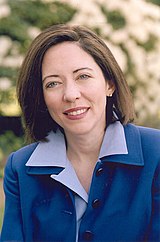
  1. Maria E. Cantwell (born October 13, 1958) is the junior United States Senator from the state of Washington and is a member of the Democratic Party. Previously she served in Washington House of Representatives and one term as member of the United States House of Representatives from Washington's 1st congressional district. She is Washington's second female senator.
  2. Byron Leslie Dorgan (born May 14, 1942) is the junior United States Senator from North Dakota. He is a member of the North Dakota Democratic-NPL Party, the North Dakota affiliate of the Democratic Party. In the Senate, he is Chairman of the Democratic Policy Committee and Chairman of the Committee on Indian Affairs.
  3. Russell Dana "Russ" Feingold (born March 2, 1953) is an American politician from the U.S. state of Wisconsin. He has served as a Democratic member of the U.S. Senate and the junior Senator from Wisconsin since 1993. A recipient of the John F. Kennedy Profile in Courage Award, Feingold is known for his liberal voting record and cosponsorship of the Bipartisan Campaign Reform Act ("McCain–Feingold Act"), a major piece of campaign finance reform legislation. He was also the only Senator to vote against the USA PATRIOT Act. He had been mentioned as a possible candidate in the 2008 Presidential election, but following the November midterm elections of 2006 he chose not to run.

  4. Timothy Peter Johnson (born December 28, 1946) is the senior United States Senator from South Dakota and a member of the Democratic Party. He was the subject of national attention in December 2006 when his ill health raised the possibility that, were he to die, the South Dakota governor might appoint a Republican to fill his seat, thus returning the Senate to Republican control after elections which had given the Democratic Party a slim majority. Johnson has since regained his health, and now continues his service in the Senate.
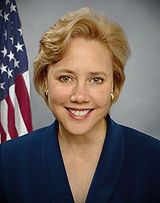
  5. Mary Loretta Landrieu (born November 23, 1955) is the senior United States Senator from the state of Louisiana, and the only Louisiana woman to be elected to the U.S. Senate, following in the footsteps of Senators Rose Long (1935) and Elaine Edwards (1972), who were both appointed. She is the daughter of former New Orleans mayor Moon Landrieu and the sister of current Louisiana Lieutenant Governor Mitch Landrieu. By national standards, Landrieu is among the most conservative Democrats in the U.S. Senate, and is a member of the New Democrat Coalition. She is up for re-election in 2008 in what is expected to be a close race with state Treasurer John N. Kennedy.

  6. Clarence William "Bill" Nelson (born September 29, 1942) is the senior U.S. Senator from Florida. Nelson is a member of the Democratic Party. Nelson became the second sitting member of the United States Congress to fly in space when he flew aboard the Space Shuttle Columbia as a Payload Specialist during NASA mission STS-61-C (January 12–18, 1986). Bill Nelson lives in the Baldwin Park neighborhood of Orlando (as does Republican Senator Mel Martinez) and Washington.

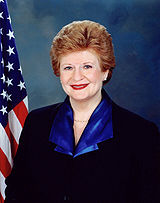
  7. Deborah Ann "Debbie" Stabenow (born Deborah Ann Greer on April 29, 1950) is a Democratic United States Senator from Michigan. In the 2000 election, Stabenow defeated the Republican incumbent, Senator Spencer Abraham. She is the first female senator from Michigan. She and Washington's Maria Cantwell were the first women to defeat incumbent elected senators in a general election, Carol Moseley Braun of Illinois having done so in a primary in 1992. Stabenow was re-elected in 2006.

  8. Jon Tester (born August 21, 1956) is an organic farmer and junior U.S. Senator from the state of Montana, and a member of the Democratic Party. Prior to his election in 2006, he served as President of the Montana State Senate.
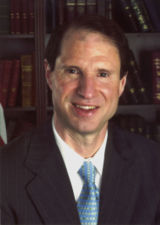
  9. Ronald Lee Wyden (born May 3, 1949) is an American politician. He is currently the U.S. state of Oregon's senior United States Senator. He is a member of the Democratic Party. After initially attending college on a basketball scholarship, Wyden earned a bachelor's degree and a law degree. He later taught gerontology at several Oregon universities. He won a seat in the United States House of Representatives in 1980, and then in the U.S. Senate in 1996.
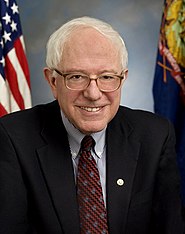
  10. Bernard "Bernie" Sanders (born September 8, 1941) is the current junior United States Senator from Vermont. Sanders was elected on November 7, 2006, and is currently a member of the 110th United States Congress. Before becoming Senator, Sanders represented Vermont's at-large district in the United States House of Representatives for 16 years. Sanders is a self-described democratic socialist, but because he does not belong to a formal political party he appears as an independent on the ballot. Sanders caucuses with the Democratic Party and is counted as a Democrat for the purposes of committee assignments. He was the only independent member of the House during much of his service there and is one of two independent Senators in the 110th Congress, along with Joe Lieberman. Sanders is the first self-described socialist to be elected to the U.S. Senate.[1] Sanders left the House in order to run in the 2006 election for the Senate seat being vacated by the retiring Jim Jeffords and won the election with 65% of the vote.
  11. Alan Wayne Allard (born December 2, 1943) is the senior United States Senator from Colorado and a member of the Republican Party.
  12. John Anthony Barrasso (born July 21, 1952) is a Republican senator from Wyoming. He was appointed by Governor Dave Freudenthal to succeed the late Craig L. Thomas. He took office on June 25, 2007.
  13. Samuel Dale Brownback (born September 12, 1956) is the senior United States Senator from the U.S. state of Kansas. During 2007, he was a Republican candidate in the 2008 Presidential election. He has subsequently announced that he will not seek re-election to the Senate in 2010.
  14. James Paul David "Jim" Bunning (born October 23, 1931) is an American politician and former pitcher in Major League Baseball. He was elected to the United States Senate from Kentucky in 1998 and has served there since 1999 as the Republican junior U.S. Senator. He previously served in the U.S. House of Representatives representing Kentucky's 4th Congressional District from 1987 to 1999. Bunning is a member of the Baseball Hall of Fame.
  15. William Thad Cochran (born December 7, 1937) is the senior United States Senator from Mississippi. He is a Republican.
  16. Michael Dean "Mike" Crapo (pronounced "Cray-poe") (born May 20, 1951) is the junior United States Senator from Idaho. He is a member of the Republican Party. He will become Idaho's Senior Senator in January 2009, as Larry Craig has decided to not seek reelection.
  17. James Warren DeMint (born September 2, 1951) has been a U.S. Senator from South Carolina since 2005. He had previously represented South Carolina's 4th congressional district from 1999 to 2005. He is a member of the Republican Party.
  18. Mary Elizabeth Hanford "Liddy" Dole (born July 29, 1936) is an American politician who served in both the Ronald Reagan and George H.W. Bush presidential administrations, and currently serves as a United States senator from North Carolina. She was elected to the Senate in 2002 and is the first female senator for North Carolina. She is running for re-election in the United States Senate election in North Carolina, 2008. She is a member of the Republican Party and former chair of the National Republican Senatorial Committee. She is married to former U.S. Senate Majority Leader and 1996 Republican presidential nominee Sen. Bob Dole.
  19. Michael Bradley "Mike" Enzi (born February 1, 1944) is a United States Senator from Wyoming. Before his election to the U.S. Senate in 1996, Enzi was a businessman who at one time owned family shoe stores. He later became a politician on the state level, having served in the state legislature for more than a decade. He was reelected to the U.S. Senate in 2002 and will be up for election again in 2008.
  20. James Mountain "Jim" Inhofe (born November 17, 1934) is a American politician from Oklahoma. A member of the Republican Party, he currently serves as the senior Senator from Oklahoma. He is among the most vocal critics of global warming in Congress.[1] Inhofe often cites the Bible as the source for his positions on various political issues.

  21. Charles Patrick "Pat" Roberts (born April 20, 1936) is the junior United States Senator from Kansas. A member of the Republican Party, he was formerly the Chairman of the Senate Intelligence Committee.
  22. Jefferson Beauregard "Jeff" Sessions III (born December 24, 1946) is the junior United States Senator from Alabama. He is a member of the Republican Party.
  23. Richard Craig Shelby (born May 6, 1934), sometimes known as Dick Shelby, is an American politician. He currently is the senior U.S. Senator from Alabama. Originally elected to the Senate as a Democrat, Shelby switched to the Republican Party in 1994 when it gained the majority in Congress.
  24. David Bruce Vitter (born May 3, 1961) is the junior United States Senator from Louisiana and a member of the Republican Party. Formerly a member of the United States House of Representatives, first elected in 1999, representing the suburban Louisiana's 1st congressional district, Vitter was elected to the Senate in 2004. Vitter was born and raised in New Orleans. He attended Harvard University for his undergraduate studies and Tulane University for law school in addition to winning a Rhodes Scholarship to University College, Oxford. He served as a member of the Louisiana House of Representatives before entering the U.S. House. Vitter is a staunch supporter of conservative political views. His legislative agenda includes positions ranging from pro-life to pro-gun rights while legislating against gambling, same-sex marriage, funding for abortion providers, increases in the State Children's Health Insurance Program, the United Nations, and amnesty for America's undocumented workers. Vitter's stated positions include a balanced budget constitutional amendment,[1] abolishing the federal and state estate tax,[2] increasing local police forces,[3] and an assortment of health care, tax and national defense reforms.[4] In the aftermath of the disastrous Hurricane Katrina, Vitter worked with the Louisiana congressional delegation to bring disaster relief to the region for rebuilding and aiding the victims disagreeing primarily over the issue of public housing. In July 2007, Vitter was identified as a client of "D.C. Madam" Deborah Jeane Palfrey's prostitution service in Washington, D.C.
  25. Roger Frederick Wicker (born July 5, 1951) is an American politician from the state of Mississippi. A Republican, he is currently Mississippi's junior U.S. Senator. From 1995 to 2007, Wicker served in the United States House of Representatives, representing Mississippi's 1st congressional district.


Wednesday, October 01, 2008

Thee Ayes have it.


The Ayes have it and our country went away
folded dollar bills took flight to china india and the UK
away from the hungry stomaches down in New Orleans
The IMF got its way today maybe we should just elect pinochet
it's a sad sad day in America

This is revolting

The wool is being pulled over our eyes as we speak, and the taxpayers are being robbed. It is revolting that stock market hits a bump and everyone in Washington runs to save it. But while New Orleans was flooded NOBODY did shit. And New Orleans is STILL a mess years later. Its disgusting. I'm so disappointed by our leadership They are not looking out for us, CLEARLY. The distaste in my month is so bitter. Americans have to get up off their ass and make the difference. "TRUST US" is not an option. Elections is right around the corner, I want to see third parties collectively reach 15%-20% in the polls. Really Don't vote for Obama or McCain, they want you to be responsible for Wall St. "When Wall St. makes a profit they keep it, If Wall St. fails we all pay." That has to STOP!

Here's a movie about New Orleans, its a current look at what this city is going through. Katrina happened in 2005, its 2008. What the hell happened!

Tuesday, September 30, 2008

How do I find my congressman? How can I call them?

Its actually really easy to contact your representative in congress. The congress is setup as a body of government that is extremely responsive to the people that live in their town. Thats what stopped the bailout. Clearly we have to keep the pressure up if you don't want $700 billion dollars going to a system that is broken to be fixed by the guys who broke it. "you broke it, you bought it" the money is there right now to give up. Getting it from taxpayers is not the right plan. Get it from these companies that do trillions of dollars of business in minutes.

What you need to do:


1.) If your not sure what district you live in go here. You can put in your address and get your 2 senators and your congressman.

2.) Once you know what district you live in go here. From there you go to their local page. They all have local phone numbers and local offices.

3.) If you can find their name on this list, that means they wanted this crazy plan without thinking about it; making a decision out of fear. If you look at this, the money wasn't going into the system right away. We have time to look at this and study it and think about Plan A B or C. You can read the whole bill here. The great "oversights" and the "no golden parachutes" are not there! Some committee assigned in APRIL next year will over see this! Come on people, lets not be stupid. Let them know its our money, treat it with respect!

The YES VOTE for the Bailout

Ackerman
Allen
Andrews
Arcuri
Bachus
Baird
Baldwin
Bean
Berman
Berry
Bishop (GA)
Bishop (NY)
Blunt
Boehner
Bonner
Bono Mack
Boozman
Boren
Boswell
Boucher
Boyd (FL)
Brady (PA)
Brady (TX)
Brown (SC)
Brown, Corrine
Calvert
Camp (MI)
Campbell (CA)
Cannon
Cantor
Capps
Capuano
Cardoza
Carnahan
Castle
Clarke
Clyburn
Cohen
Cole (OK)
Cooper
Costa
Cramer
Crenshaw
Crowley
Cubin
Davis (AL)
Davis (CA)
Davis (IL)
Davis, Tom
DeGette
DeLauro
Dicks
Dingell
Donnelly
Doyle
Dreier
Edwards (TX)
Ehlers
Ellison
Ellsworth
Emanuel
Emerson
Engel
Eshoo
Etheridge
Everett
Farr
Fattah
Ferguson
Fossella
Foster
Frank (MA)
Gilchrest
Gonzalez
Gordon
Granger
Gutierrez
Hall (NY)
Hare
Harman
Hastings (FL)
Herger
Higgins
Hinojosa
Hobson
Holt
Honda
Hooley
Hoyer
Inglis (SC)
Israel
Johnson, E. B.
Kanjorski
Kennedy
Kildee
Kind
King (NY)
Kirk
Klein (FL)
Kline (MN)
LaHood
Langevin
Larsen (WA)
Larson (CT)
Levin
Lewis (CA)
Lewis (KY)
Loebsack
Lofgren, Zoe
Lowey
Lungren, Daniel E.
Mahoney (FL)
Maloney (NY)
Markey
Marshall
Matsui
McCarthy (NY)
McCollum (MN)
McCrery
McDermott
McGovern
McHugh
McKeon
McNerney
McNulty
Meek (FL)
Meeks (NY)
Melancon
Miller (NC)
Miller, Gary
Miller, George
Mollohan
Moore (KS)
Moore (WI)
Moran (VA)
Murphy (CT)
Murphy, Patrick
Murtha
Nadler
Neal (MA)
Oberstar
Obey
Olver
Pallone
Pelosi
Perlmutter
Peterson (PA)
Pickering
Pomeroy
Porter
Price (NC)
Pryce (OH)
Putnam
Radanovich
Rahall
Rangel
Regula
Reyes
Reynolds
Richardson
Rogers (AL)
Rogers (KY)
Ross
Ruppersberger
Ryan (OH)
Ryan (WI)
Sarbanes
Saxton
Schakowsky
Schwartz
Sessions
Sestak
Shays
Simpson
Sires
Skelton
Slaughter
Smith (TX)
Smith (WA)
Snyder
Souder
Space
Speier
Spratt
Tancredo
Tanner
Tauscher
Towns
Tsongas
Upton
Van Hollen
Velázquez
Walden (OR)
Walsh (NY)
Wasserman Schultz
Waters
Watt
Waxman
Weiner
Weldon (FL)
Wexler
Wilson (NM)
Wilson (OH)
Wilson (SC)
Wolf

Get More Educated on WHY DEMOCRATS BLOCKED THIS BILL!


Thank You!

Thanks to these Congressmen for voting this $700 billion bailout down. By Last name here they are. I'm happy with my congressman John Teirney!

Abercrombie
Aderholt
Akin
Alexander
Altmire
Baca
Bachmann
Barrett (SC)
Barrow
Bartlett (MD)
Barton (TX)
Becerra
Berkley
Biggert
Bilbray
Bilirakis
Bishop (UT)
Blackburn
Blumenauer
Boustany
Boyda (KS)
Braley (IA)
Broun (GA)
Brown-Waite, Ginny
Buchanan
Burgess
Burton (IN)
Butterfield
Buyer
Capito
Carney
Carson
Carter
Castor
Cazayoux
Chabot
Chandler
Childers
Clay
Cleaver
Coble
Conaway
Conyers
Costello
Courtney (CT)
Cuellar
Culberson
Cummings
Davis (KY)
Davis, David
Davis, Lincoln
Deal (GA)
DeFazio
Delahunt
Dent
Diaz-Balart, L.
Diaz-Balart, M.
Doggett
Doolittle
Drake
Duncan
Edwards (MD)
English (PA)
Fallin
Feeney
Filner
Flake
Forbes
Fortenberry
Foxx
Franks (AZ)
Frelinghuysen
Gallegly
Garrett (NJ)
Gerlach
Giffords
Gillibrand
Gingrey
Gohmert
Goode
Goodlatte
Graves
Green, Al
Green, Gene
Grijalva
Hall (TX)
Hastings (WA)
Hayes
Heller
Hensarling
Herseth Sandlin
Hill
Hinchey
Hirono
Hodes
Hoekstra
Holden
Hulshof
Hunter
Inslee
Issa
Jackson (IL)
Jackson-Lee (TX)
Jefferson
Johnson (GA)
Johnson (IL)
Johnson, Sam
Jones (NC)
Jordan
Kagen
Kaptur
Keller
Kilpatrick
King (IA)
Kingston
Knollenberg
Kucinich
Kuhl (NY)
Lamborn
Lampson
Latham
LaTourette
Latta
Lee
Lewis (GA)
Linder
Lipinski
LoBiondo
Lucas
Lynch
Mack
Manzullo
Marchant
Matheson
McCarthy (CA)
McCaul (TX)
McCotter
McHenry
McIntyre
McMorris Rodgers
Mica
Michaud
Miller (FL)
Miller (MI)
Mitchell
Moran (KS)
Murphy, Tim
Musgrave
Myrick
Napolitano
Neugebauer
Nunes
Ortiz
Pascrell
Pastor
Paul
Payne
Pearce
Pence
Peterson (MN)
Petri
Pitts
Platts
Poe
Price (GA)
Ramstad
Rehberg
Reichert
Renzi
Rodriguez
Rogers (MI)
Rohrabacher
Ros-Lehtinen
Roskam
Rothman
Roybal-Allard
Royce
Rush
Salazar
Sali
Sánchez, Linda T.
Sanchez, Loretta
Scalise
Schiff
Schmidt
Scott (GA)
Scott (VA)
Sensenbrenner
Serrano
Shadegg
Shea-Porter
Sherman
Shimkus
Shuler
Shuster
Smith (NE)
Smith (NJ)
Solis
Stark
Stearns
Stupak
Sullivan
Sutton
Taylor
Terry
Thompson (CA)
Thompson (MS)
Thornberry
Tiahrt
Tiberi
Tierney (MA)
Turner
Udall (CO)
Udall (NM)
Visclosky
Walberg
Walz (MN)
Wamp
Watson
Welch (VT)
Westmoreland
Whitfield (KY)
Wittman (VA)
Woolsey
Wu
Yarmuth
Young (AK)
Young (FL)